



Episode Summary
In this episode of Market the Machines, host Justin Brown sits down with Dennis Ledenkof, Founder, and Elena Kormilina, Head of International Projects at Robosculptor. They explore how robotics companies can turn technical innovation into real market adoption, focusing on the journey from prototype to paying customers.
Dennis shares how Robosculptor moved from building handheld devices to developing a robotics platform for wellness treatments. He explains the importance of early customer feedback, trade show testing, and adapting both the product and target market. Elena adds insight from the frontlines of industry events, describing how the team learned to create not just a minimum viable product, but a minimum lovable product that real buyers want to use.
Together, they break down what it takes to identify the right customer profile, prove product-market fit, and keep evolving through fast cycles of feedback. The conversation offers a clear look at the practical steps robotics founders need to win their first customers and scale adoption.
Guest Profile
- What he does: Founder
- Company: Robosculptor
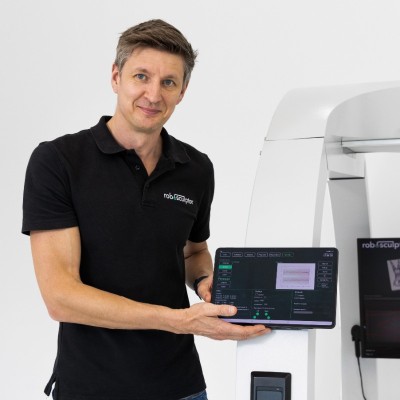
- Noteworthy: Dennis leads the creation and market strategy of Robosculptor, focusing on bringing robotic wellness treatments to gyms, spas, and wellness centers.
- Where to find him: LinkedIn
- Guest Company Website: robosculptor.com
Guest Profile
- What she does: Head of International Projects
- Company: Robosculptor
- Noteworthy: Elena drives international outreach and customer engagement, gathering hands-on feedback to shape Robosculptor’s product for global wellness and fitness markets.
- Where to find her: LinkedIn
- Guest Company Website: robosculptor.com

Key Insights
-
Finding Product-Market Fit Means Testing Early and Adapting Fast
Launching a robotics product isn’t just about technical achievement. The real challenge starts after the prototype, when the focus shifts to finding out who wants to buy it. Early and honest feedback from real users is key. Testing in new markets, listening to potential buyers at trade shows, and being ready to adjust the product help companies avoid wasted time and resources. The sooner a team identifies its true customer and proves product-market fit, the easier it becomes to refine both the offering and the message. Flexibility and fast cycles of feedback let teams pivot into broader opportunities and build solutions people actually want. In crowded markets, early adaptation is the best way to turn invention into a business that lasts. -
Minimum Lovable Product Beats Minimum Viable Product in Wellness Tech
Getting someone to try a new health or wellness device takes more than just showing it works. In this space, customers need to feel drawn to the product—curious enough to try it and satisfied enough to return. The goal should be a “minimum lovable product,” not just a minimum viable one. Emotional response and trust matter as much as features. Small details like safety, design, and comfort can tip the balance from skepticism to adoption. Teams that prioritize real-world experience, collect feedback at every step, and improve the product based on what people love (and what worries them) will see stronger demand and loyalty. For robotics in wellness, being lovable is as important as being functional. -
Wellness Is Moving Mainstream—And So Is Automation
Wellness services like massage, red light therapy, and biohacking are no longer only for luxury spas or elite gyms. Regular fitness centers, hotels, and even smaller studios now offer these services to meet growing demand for self-care and recovery. Automation and robotics fit naturally here, as operators look for scalable ways to deliver quality experiences without needing more staff. This shift opens new markets for robotics companies—if they can show clear value for both business owners and end users. Companies that measure real outcomes (like membership retention or customer satisfaction), design for easy integration, and target the needs of mainstream buyers will lead the next wave of wellness automation. The market is wide open for solutions that make wellness accessible, reliable, and easy to adopt.
Episode Highlights
Turning Hardware into Automated Wellness
Robosculptor started as a handheld device for body contouring but shifted to full automation after exploring how robotics could deliver treatments without human intervention. This change transformed traditional wellness equipment into a scalable, software-driven platform. By integrating a collaborative robotic arm and intelligent algorithms, Robosculptor aimed to offer consistent, science-backed massages in gyms and wellness spaces—no specialist required. This early pivot set the stage for broader adoption and drove the team to think beyond just building hardware.
“So Robosculptor is a solution that delivers wellness massages to people without attracting a specialist. It can transform a fitness center or a regular gym into a wellness destination by providing a service of non-human assisted massages based on science that has a proven track record.”
Real-World Feedback Drives Product Evolution
Robosculptor’s team made trade shows and industry events core to their product development. They sought candid feedback on design, safety, and user experience from potential buyers across fitness, wellness, and aesthetics. This proactive approach uncovered both interest and skepticism, pushing changes in design and positioning. Every trade show or demo became a chance to learn what buyers needed—and feared. This cycle of testing and listening ensured the product was shaped by market realities, not just internal assumptions.
“We started to talk to people and the machine looked differently. We got feedback—maybe you make a different design because the machine looks scary. What about the safety system? What is the privacy that you use internally? Do you have security, connection protocols? We started to go to market as soon as we could, and we expected to sell the machine at that stage, but it was too early. The feedback and the data transformed the vision of how the product should be built to fit customer expectations.”
Building for Both Immediate Value and Future Markets
Robosculptor tested its product in various settings, from biohacking clinics to luxury hotels. Rather than rushing straight to mass sales, the team focused on proof of concept installations and measured business outcomes like retention, revenue, and user satisfaction. This approach allowed the product to evolve for different markets—fitness, wellness, and recovery—while gathering hard numbers to convince future buyers. The team’s ongoing installations are about more than validation; they’re about building a business case for wider adoption.
“We had our commercial installation, but we are still getting feedback because we want the product to serve different industries. This particular installation is a biohacking clinic, so it’s unique in its concept. The proof is not just proof of concept, but more the proof of the numbers—the economy, that the mathematics work. That’s still something we are working on and planning.”
Embracing Setbacks as Part of the Growth Process
The team at Robosculptor learned to treat setbacks and criticism as fuel for progress. They emphasized the emotional challenge of refining a product you care about, only to realize it misses the mark for the market. Instead of clinging to initial ideas, they leaned on team motivation and outside validation to keep moving. This willingness to adapt, accept failure, and start again became a core part of their culture and a key driver for eventual market fit.
“When you’re creating a product, this is your child and you love everything about it. When people come in and criticize that, and you need to start over because you failed the market expectations or you’ve failed this particular customer, that can be a challenge and it requires real demeanor. The motivation and the support within the team is critical to continue believing in what you’re creating.”